Baby Names

Now that Renee and I are within 10 weeks of meeting Baby G, it’s time to get serious about names.  Other than my genetics, this will be one of the few things I give my son that will follow him throughout his entire life.  Man, that’s pressure to not screw this up!  What kind of name should I give my son?  A “strong” name like Thor, Magnus, Adonis, Maximillian, Bruno or Nikolai?  Or maybe a “sensitive” name like Jayden, Tristan, Emanuel or Gaston?  Not that I don’t like these names, just a bit on the fringe for my taste.

Maybe I should focus on the most common names for CEO’s as published by LinkedIn – Howard, Peter, Bob, Jack, Bruce or Fred?  Or, it would be kinda cool for him to be a super-star athlete so he can make millions and take care of dear old dad in my old age.  In that case, according to LinkedIn, we should name him Ryan, Matt or Jason.

The most common 2-letter name is Ed.  The most common 10-letter name is Alessandro.

Then there are family names.  Of course, I’m partial to Robert as three generations on my side carry this name.  Renee’s dad is a Robert as well.  Mmmm, maybe a good middle name?

Christopher, Keith, Sonny, Jerry, Daniel are close family names.

Maybe we’ll choose 3 names and meet our son before we decide what name fits best?

Hey parents out there, how did you do it?

On My “To Read” Shelf

Unfortunately, my “to read” shelf is growing faster than I can clear my “currently reading” shelf.  Busy with work and lot’s of travel have encroached on my reading time.  But here are the books on my list, as usual a mix of business, personal interest and self-improvement.

The Presence Process:  A Healing Journey into Present Moment Awareness by Michael Brown.  Recommended by family, always healthy I believe to have a self-awareness read in the queue.

The Big Short:  Inside the Doomsday Machine by Michael Lewis, the author of Liar’s Poker and The Blind Side.  A close friend recommended this read which delves into the macrocosmic tale of greed and fear during the 2007/8 Wall Street crisis.

Born to Run:  A Hidden Tribe, Superathletes, and the Greatest Race the World Has Never Seen by Christopher McDougall.  A personal journey into understanding ultra-distance running as a way of life, health and contentment among the Mexican Tarahumara tribe.  My running life has become un-fun and too functional, so am looking for a little inspiration.

Think and Grow Rich by Napoleon Hill.  This book was written nearly 75 years ago now as a philosophical approach to living life and interacting with our fellowman, conceived through research and personal interviews of leaders of that time – Ford, Edison, Rockefeller, Graham Bell and 500 others.

Little Bets:  How Breakthrough Ideas Emerge from Small Discoveries by Peter Sims (@petersims).  Sims is an entrepreneur, VC and author of True North.  His research contends that many of the most successful companies and individuals did not result from some genius idea, but rather through a masterful approach to experimentation and learning.  Excited to read this one, it has just recently been released.

Do More Faster:  TechStars Lessons to Accelerate your Startup by Brad Feld (@bfeld) and David Cohen (@davidcohen).  TechStars is a successful startup accelerator operating in several U.S. cities co-founded by Feld and Cohen.  I follow both actively through Twitter and their individual blogs and have met Brad recently.

I need to find a way to carve out more reading time before this list gets out of hand!

What’s on your list?

My Favorite Twitter Follows

I wanted to follow up a prior post on my favorite startup blogs with a post on a handful of my favorite Twitter follows.  These are a group of folks, most of whom I only know by reputation, that have something to say or news to share about technology, startups or entertainment.  As I mentioned previously, Twitter has become a go-to source of news and insights for me, an incredibly efficient way to absorb a lot of information quickly.  Enjoy!

News, Technology & Startups

  • @TrueCar – of course.
  • @TechCrunch – the leading startup blog, news feed.  Good iPhone app too.
  • @TEDNews – news source for incredible human innovations
  • @venturehacks – Startup advice
  • @nytimes – Also on my iPhone
  • @cnnbrk – CNN Breaking News
  • @GOOD – An association of “pragmatic idealists” focusing on issues of Good in the world
  • @Oxfam – An international group of 15 organizations across the world developing solutions for poverty & injustice.
  • @bfeld – Brad Feld, VC and prolific blogger, highlighted in a prior post.  Highly active on Twitter.
  • @msuster – Mark Suster, Entrepreneur turned VC, very active blogger and on Twitter.
  • @sacca – Chris Sacca, Entrepreneur and early investor in Twitter.  Highly active.
  • @Bill_Gross – Founder of Idealab and 100 other companies over 30 years
  • @tferriss – Tim Ferriss, author of “4-Hour Work Week” and “4-Hour Body”.  Interesting and unique.
  • @fredwilson – Highly regarded VC and daily blogger.
  • @cdixon – Chris Dixon, entrepreneur founder of Hunch.
  • @davemcclure – Founder of 500startups, a seed fund and startup accelerator.
  • @hnshah – Hiten Shah, Co-Founder of KissMetrics, great insights for entrepreneurs.
  • @bhorowitz – Ben Horowitz, Founder of LoudCloud turned VC.  Phenomenal blog that I inadvertently left off my previous post.

Entertainment & Other

  • @SudsNYC – Sudhir Kandula, a friend and top 3 finalist in “America’s Next Great Restaurant”.
  • @playgrounddad – Connecting modern dads with products/events that help them spend better time with their kids.
  • @StartupJesus – Fake Jesus, runs a startup that is “going to change the world”.  Of course it will.
  • @ConanOBrien – love his humor and his show.
  • @BorowitzReport – Andy Borowitz, hilarious quips on current events.  King of the one-liners.
  • @donttrythis – Adam Savage, host of Mythbusters
  • @TheOnion – America’s finest fake news source
  • @bobsaget – ever since he appeared on Entourage, I can’t get enough of him.
  • @shitmydadsays – Justin who lives with his 74-year old dad.  4-letter word alert, but freakin’ funny.

What are some great Twitter follows that I missed?

Do You Have a Disaster Kit?

I didn’t.  Never really thought emergency preparedness until it came up in a discussion group of media, entertainment and technology executives I’m involved with here in Los Angeles.  And as an expecting father I became particularly interested in this topic (and others).  An irrational and emotional response?  Maybe.

But keep in mind I live in Santa Monica in the greater Los Angeles area, the epicenter for speculation and concern regarding “The Big One” earthquake that will originate on the San Andreas Fault someday.  In fact, the USGS has a downright scary simulation of the 7.8 Big One that originates on the fault line and fans out to the coast and right up my driveway.  To give you perspective, a 7.8 earthquake involves ground movement of 3ft laterally and “shaking” at 1ft/second.  Crazy.

The email discussion thread started out rational enough among the group – if you want to be prepared for a natural disaster, there is lot’s of guidance out there on what to include in your home or auto kits, sources for purchasing supplies, recommendations on what to do when a disaster hits and there’s no road or phone access, etc.

As is typical among this intellectual group, a few of which are experts in statistical modeling for natural disasters, another an entrepreneur that sells disaster kits, a debate ensued that left most folks in 3 distinct camps:

1) Emergency preparedness is based on irrational exuberance, that statistically speaking and from a cost/benefit standpoint, is a waste of time and money, even if you live in Southern California, Southeast Asia, Japan or Florida where adverse natural events tend to occur.  Add up the cost for every human to have a “kit”, then factor in the economic benefit of lives saved and if the number is negative, it is irrational.

2) Basic survival kits for home, auto and “on the go” are no-brainers.  These include food, water, first aid and other survival gear along with a “family plan” of where to meet should roads and phones be inaccessible.

3) “Extreme” (my word) Emergency Preparedness which advocates for all of the items in #2 in addition to retaining firearms in the home and auto in anticipation of possible riots, theft and personal attack by those who were not prepared.  In some cases, underground bunkers are installed and stocked with supplies.

After taking in all the data, I fall squarely in the camp of #2, based primarily on where I live.  I’ve just ordered basic kits for home and auto, but personally I’m not a big fan of having a firearm in the house, just my personal preference.  Renee and I are working out a simple “meet up” plan should we not be able to use our cell phones or our cars.  We’re talking a hundred bucks and a few minutes of time all in here.

Seems like a reasonable cost/benefit to me.

Do you have a disaster kit or plan?  What’s in it?
4D Ultrasound, Wonderful and Creepy

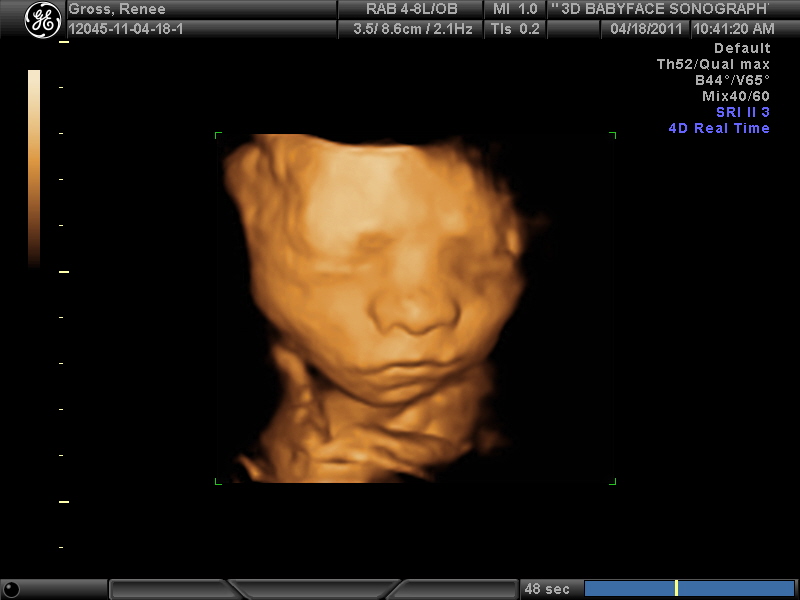
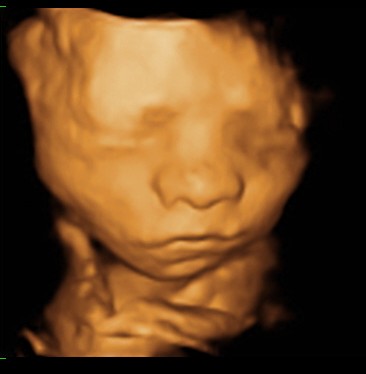
On Monday Renee and I went for our non-medical, baby-in-the-belly-for-entertainment 4D ultrasound.  This procedure is where they use a skin-level view imaging system in combination with the ultrasound to give 3D views of your unborn child plus movement (thus the 4D).  We spent about an hour with the technician poking, prodding and moving Renee into various positions to give us the most non-creepy view possible of our little one.  It was wonderful and creepy at the same time as evidenced by the picture.  Renee’s family will be happy to know that Baby G has her nose and mouth!


My Favorite Tech Startup Blogs

There are lots of interesting and insightful tech industry blogs out there, many of which are highly trafficked and very well known.  Such properties like Techcrunch, VentureBeat, OnStartups, ReadWriteWeb, Mashable are all great blog and news feeds, but I’d like to share a few of my personal favorites that are popular, but not as mainstream as some of these news sites.  Here goes:

Both Sides of the Table.  This blog is written by Mark Suster, a leading Los Angeles VC and entrepreneur.  Mark interviews entrepreneurs as well as shares his experience as an investor.  Not news based, rather techniques and insights for helping entrepreneurs succeed.  One of the most active bloggers out there.  Follow Mark on Twitter @msuster.

Feld Thoughts.  Written by Boulder-based VC Brad Feld, also an entrepreneur and now partner in Foundry Group and co-founder of TechStars.  He blogs daily about his experiences, investments and personal use of technology.  I’ve met Brad and really enjoy his daily posts.  Follow Brad on Twitter @bfeld.

A VC.  Written by now legendary VC Fred Wilson, he also posts daily with common sense advice and techniques for entrepreneurs trying to navigate fundraising, selling and operating their businesses.  He also blogs about his personal use of technology and investments being made by his firm Union Square Ventures.  Follow Fred on Twitter @fredwilson.

Tim Ferriss Blog.  Tim is the best-selling author of “The 4-Hour Workweek” and “The 4-Hour Body”, both #1 NYTimes Bestsellers.  This blog is incredibly insightful and full of non-intuitive, practical advice for entrepreneurs.  I saw Tim speak in Los Angeles, pretty amazing guy.  Follow Tim on Twitter @tferriss.

Jason Calacanis Newsletter.  Jason is a serial entrepreneur and is into everything startup.  Currently the Founder of Mahalo and LAUNCH Conference, Jason puts out a periodic newsletter to subscribers.  Go to his website and enter your email in the upper right box under “Jason Nation Newsletter”.  Follow Jason on Twitter @jason.

While there are about 30 more on my list, these are my daily favs.

I’ll follow up this post with my favorite Twitter follows (a much longer list).

What are some other great startup blogs out there?

The Morning Ride

Today was the first day I’d been out for a before work, early morning cycle ride in probably 8 months.  I’ve been doing my riding almost exclusively on the weekends, not regularly, and I’ve really missed getting in a 2nd or 3rd ride in during the week.

It was gorgeous this morning.  I did a short version of my typical route from Venice, out the Pacific Coast Highway to Topanga Canyon, then up Fernwood to the top of saddle peak and back.  Here are the stats from my Polar 800CSX computer:

  • Time Elapsed:  2:16:41
  • Miles:  34.45
  • Elevation Gain:  2,620 ft
  • Max Speed: 40.1 mph
  • Avg HR:  142
  • Max HR:  168
  • Calories:  1,805

I love geeking out on statistics, especially when I’m training for some event.  Believe it or not, just by tracking this stuff leads to improvement.  And I’ll need lots of improvement to get ready for Mt. Baldy with only 5 weeks left until my 75 mile, 10,000 ft climb.

I’ve got a 6,000 ft of climbing day ahead of me tomorrow.

Goal Setting and My Happiness Project, Part 1

I’ve been thinking a lot lately about the age old question, “Where do I want to be in 5 years, personally & professionally?”  Like I said before, impending fatherhood has a tendency to make you think about all sorts of stuff that is typically “easy” to avoid.  That, in combination with some changes likely in my professional world, is leading me to dig a bit deeper in this area.  Some of my thinking on this subject has also been influenced by a book I recently completed titled The Happiness Project by Gretchen Rubin.  It’s a tedious read, but its a story of her 1-year project to identify and document those things that bring her happiness, joy, satisfaction and engagement in life and also to identify those things that bring anger, guilt, boredom and remorse.  Out of this exercise comes a set, again documented, of resolutions to pursue and principles that guide her actions broken into monthly objectives over a 1-year period.  Gretchen is quick to point out that you don’t have to be unhappy to embark on a Happiness Project, rather its an explicit and written attempt to identify and focus on those things that already bring happiness in your life and to minimize those things that don’t.  I’m at a great place in life right now with a new and wonderful wife, a baby boy on the way, but this seems like an interesting experiment and a way to get committed to some life planning.  In fact, by sharing my plans to do it here, I’m already committed!

I posted recently about training for a difficult cycling event in May that is requiring a disciplined, daily approach to executing against a documented plan in order to successfully achieve the goal.  For this type of fitness or event training, I’m typically very diligent, disciplined and ultimately successful.  Interestingly, I don’t always apply this same goal-oriented approach to other things in life, both personally and professionally.  But is it any different?  Having a goal or objective, no matter what its nature or time frame would likely benefit from this type of planning, right?  When I tell people that I’ve completed an Ironman Triathlon, they often say “I could never do that” and I always respond that ANYONE can do it, not tomorrow or the next day, but six months or a year from now with a detailed roadmap that starts easy, yes you can.

So this post is a setup to several more  in this series –

1. My process for identifying 5-year personal goals

2. My development of a professional plan to achieve 5-year career objectives

3. My Happiness Project

As Yin to my Yang, Renee reminded me after reading a previous post that life shouldn’t only be about planning for the future,  but also living in the moment and enjoying life as it comes.  Yes, brilliant, I agree!  So I’ll commit to “Living in the Moment” being one of my Happiness Project resolutions.

Bear with me, there’s work to do here!

What Are You Reading?

While I wouldn’t consider myself a voracious reader, I do have a habit of reading 2-3 books concurrently and they are typically of varied content.  I also have a hard time getting through an entire book unless it is very well written and engaging.  For whatever reason, I’m finding the interesting and important components in a lot of the books I’ve read lately could be communicated in 20 pages or less.  I guess I need to find better books… or get a longer attention span.

Anyway, here are the books I’m currently reading –

1. The New Dad’s Survival Guide: Man-to-Man Advice for First-Time Fathers by Scott Mactavish.  As an expecting father, I’m absorbing quite a few books in this category.  This book is laugh-out-loud funny, seriously I blurt out laughing, and easy to read, written in a quasi-military drill sergeant tone with acronyms like NFU (New Family Unit or baby), FPP (Female Parenting Partner) and BCF (Be Cool, Fool).  It’s more humor than useful, but it’s a welcome relief from some of the other father-focused books that are not only serious, but packed with more information that anyone could possibly absorb.

2. The Reason For God:  Belief in an Age of Skepticism by Timothy Keller.  It’s interesting how being a first time expecting parent can affect areas of your life that you haven’t given much thought to lately.  Spirituality and religion, for me, is a case in point.  I grew up in an active Catholic household, which I think provided a good foundation of values, but I’ve never really explored other faiths, faith in general, and challenged that belief system that I grew up in.  It has been easy to put off.  But now I feel some responsibility as a father to do some research, explore my own beliefs and develop a point of view on religion so I can at least provide a foundation for my son until he is old enough to do his own exploration of his beliefs.  This book by Timothy Keller is very good.  He makes an analytical case for God and takes it one step further, for a Christian God.  However, he does it with a balanced approach by acknowledging many common objections to God, then presenting arguments for both viewpoints.  I’m enjoying this read and intend on my next book in this category to be the opposing argument.

3. Good to Great:  Why Some Companies Make the Leap… And Others Don’t by Jim Collins.  This is an annual re-read for me.  I’ve read this book a handful of times, it’s that good.  The leadership principles in this book are so spot on as I’ve had sufficiently varied experiences to see different leadership styles perform just as Jim predicts in his book.  This book keeps me in check.

4. Inside of a Dog:  What Dogs See, Smell and Know by Alexandra Horowitz.  I’m a huge animal lover, particularly of dogs.  I know everyone thinks their dog is the greatest, smartest, most affectionate animal on the plant and I feel the same way about my dog Foster (who passed in 2008).  I really wanted to find some analytical research into the mind of man’s best friend.  Whereas most books on the subject seem to be based on opinion and experience, Alexandra, a behavioral psychologist, actually performs behavioral studies and analysis to get inside the dog.  There are nuggets of interesting facts in this book, but I’m finding it difficult to read.  At the end of the day, how can we really know what our dog is thinking?  For the most important things we long to know about what our pets are thinking, I don’t think she definitively answers them.  Probably one of those books I won’t finish.

So, what are you reading?

It’s About the Journey

Ever since our cycling trip to France last year (600 miles and 60,000 feet of elevation gain in 9 days), I’ve missed the commitment, preparation and sense of personal accomplishment that training for a strenuous physical event brings.  To prepare for France, I trained for about 6 months, riding 4-5 days per week on a pretty strict schedule of mileage & elevation gain.  As other priorities have now taken over, I’ve not spent much time on my bike, maybe one decent ride per week since we returned from the Tour de France last July.  In fact my fitness in general has taken a back seat.

Recognizing this “training” void in my life for the past 8 months, Renee for my birthday offered to drive the support vehicle so I could ride 2 stages of the upcoming Amgen Tour of California.  This is an 8-stage, pro-cycling tour event that is gaining in popularity and now competes directly with the major European tours, taking place May 15-22 along the California coast.  Amateurs have the ability to ride stages in the morning before the riders begin.

I’ll be riding Stages 6 & 7 of the Tour, the first being a relatively easy time trial through the Santa Ynez wine country outside of Santa Barbara.  The second is the defining stage of the race – Claremont to Mt. Baldy, twice!  It will be a 75 mile stage with over 10,000 feet of elevation gain during the day.  If I had to do it tomorrow, I wouldn’t make it.  That’s what makes the training journey so important and rewarding – there’s no way the objective could be achieved tomorrow, but with a detailed plan, broken into manageable and achievable components, success is all but guaranteed.

So I have roughly 6 weeks to get my cycling legs and have laid out DAILY training objectives between now and May 20.  I know precisely what I have to do tomorrow to prepare, and the next day, such that on May 20 the objective will be achieved.

Many endurance athletes would agree that the training journey, the hours, the pain, the discipline are what makes the actual race or event special.  It’s an adrenaline payoff for a lot of hard work, but many would also agree that training itself is enjoyable, even addictive.  We don’t do the training solely for the event, we do the training because it is rewarding all by itself.  The event or goal is simply what helps us stay on track, an additional motivator.

Why not apply these principles to most things in our lives – professional and personal?  I can see lot’s of opportunities in my own life to be better about setting stretch or aspirational personal goals instead of living life day to day.  Or perhaps being more diligent about my career objectives 2, 3 or 5 years from now to ensure I’m on my DAILY path to get there.

What objectives have you been putting off defining?  Maybe, just maybe the journey to reach them will be as rewarding as reaching the objective itself.